
Chargeback & Dispute Management
Overview
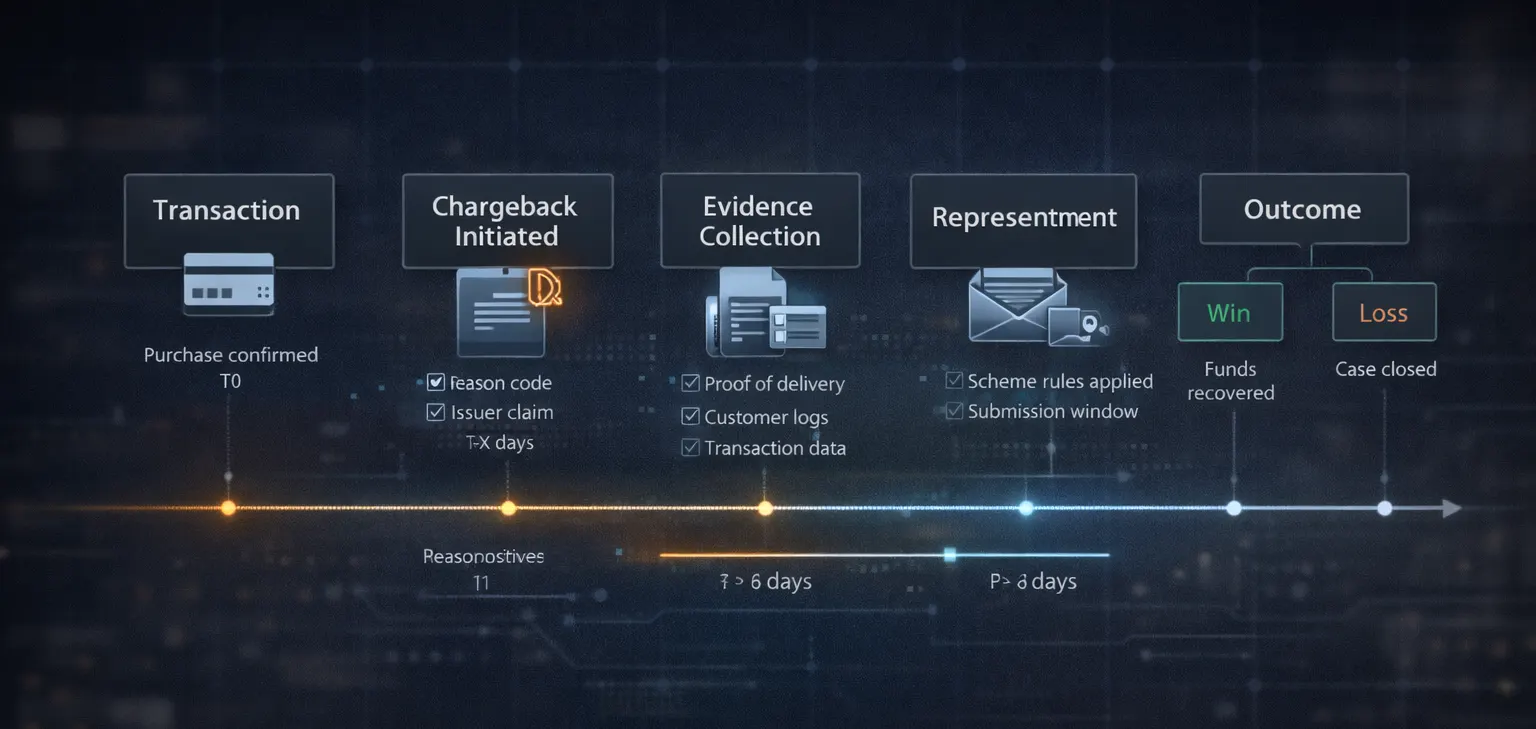
Chargeback and dispute management cover the operational handling of payment disputes raised by cardholders or banks.
The work includes case triage, evidence preparation, submission, and follow-up.
The objective is to limit losses and keep dispute levels under control.
Dispute Intake and Triage
Cases are logged and checked for reason, deadlines, and transaction context. Priorities are set based on time limits and expected impact. Obvious duplicates and invalid cases are filtered early.
Evidence Collection
Evidence is gathered based on dispute type and platform context. This can include account activity, authentication signals, usage logs, customer communication history, and refund status. The goal is a coherent case file that matches the dispute reason and network expectations.
Network Workflow Tools
When dispute tooling is part of the existing setup, workflows can include Visa Verifi and Mastercard Ethoca. These tools support case handling and tracking within network processes. They are used as part of operations, not as standalone products.
Representment and Follow-Up
After submission, cases are tracked through the dispute lifecycle. Outcomes are reviewed, and operational notes are recorded for future consistency. Loss reasons are analyzed to identify process gaps or upstream causes.
Reducing Avoidable Disputes
A portion of disputes can be reduced through consistent support and refund handling. Pre-dispute signals, customer complaints, and refund workflows are reviewed for leakage. The focus is on preventing avoidable disputes without creating unnecessary refunds.
Closing Note
Dispute work is continuous and tied to platform activity and payment conditions. Results depend on disciplined intake, consistent evidence, and clear operational follow-up. Processes can be adapted based on platform model and dispute profile.