
Subscription Platforms
Overview
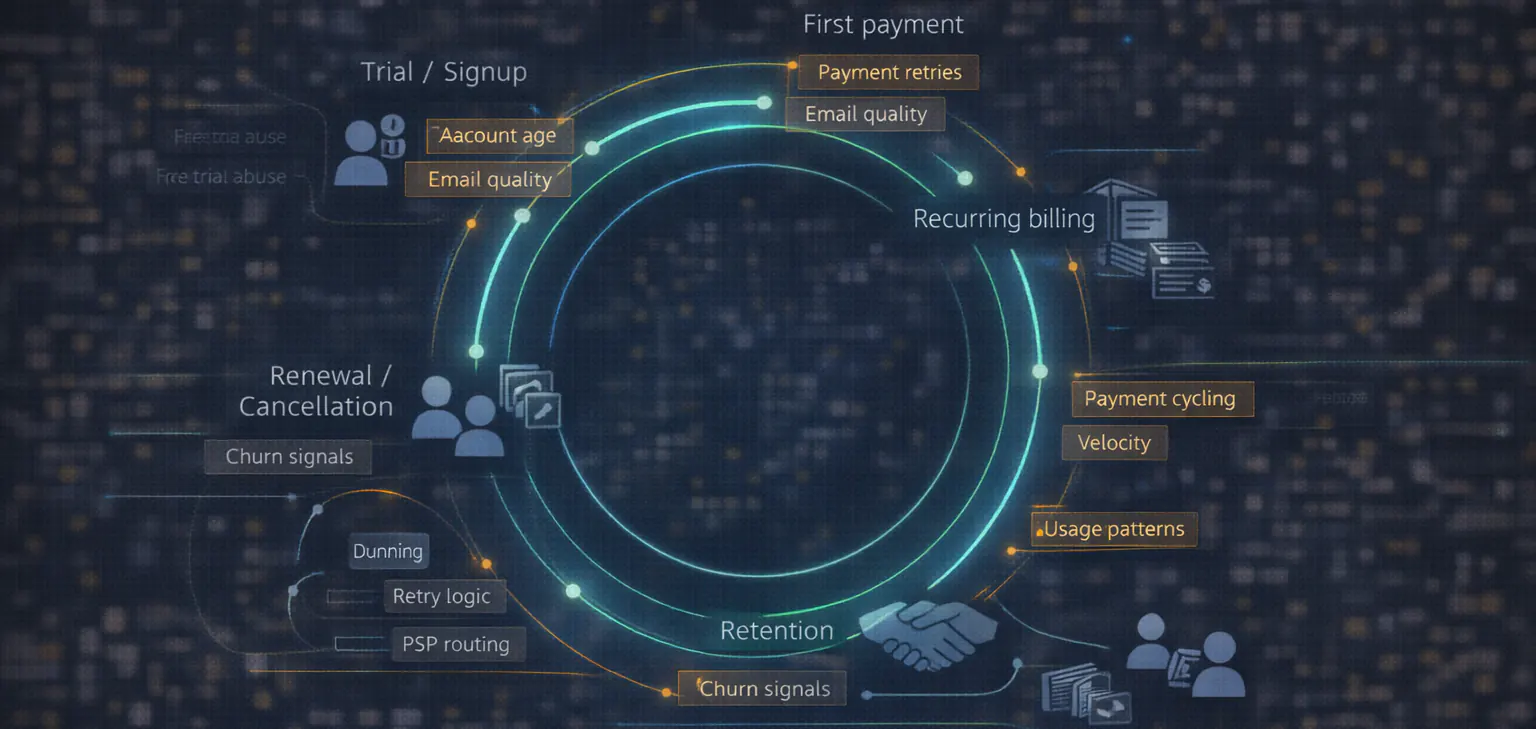
Subscription platforms rely on recurring billing and ongoing user relationships. Payments repeat over time rather than occurring as one-time events. This creates specific operational and risk considerations.
Recurring Payment Cycles
Subscriptions involve scheduled charges that may span months or years. Failures, retries, and user cancellations must be handled consistently. Operational controls focus on maintaining predictable billing behavior.
User Lifecycle and Retention
User activity changes over the course of a subscription. New users, long-term subscribers, and returning customers behave differently. Monitoring these phases helps detect issues early.
Disputes and Churn-Related Risk
Disputes in subscription models are often linked to forgotten renewals or unclear terms. Clear communication and consistent handling help reduce escalation. Operational alignment between support and billing is important.
Payment Failures and Recovery
Payment failures are a regular part of subscription activity. Retries, updates, and recovery processes must be defined and tracked. These steps help limit involuntary churn without increasing disputes.
Fraud and Account Misuse
Fraud may involve unauthorized signups or abuse of trial periods. Account-level monitoring helps identify repeated misuse. Controls are adjusted based on observed patterns rather than assumptions.
Scaling Subscription Operations
As subscriber volume grows, small inefficiencies become more visible. Processes are designed to scale without increasing operational friction. Consistency across billing cycles remains a priority.
Closing Note
Subscription platforms require steady operational control over time. Recurring payments and long-term relationships shape risk exposure. Clear processes help maintain stability as platforms expand.